The New Order in American Universities: The Trump Administration’s Path to Reshaping Higher Education

After returning to the White House following the 2024 election, the Trump administration quickly placed higher education at the center of its policy storm: massive layoffs at the Department of Education, nationwide tightening or outright termination of Diversity, Equity, and Inclusion (DEI) programs, freezing billions of dollars in research funding at elite universities under the banner of “combating campus antisemitism,” tightening international student visas, and redirecting research funding priorities.
Congress Presses Columbia University to Review and Potentially End China-Related Student Exchange Program

The U.S. House Select Committee on the Chinese Communist Party recently sent a letter to Columbia University, calling on the institution to halt a student exchange program linked to China. The publication of the letter has drawn attention both within the campus community and across the broader higher-education sector. The move is viewed as another example of Congress intensifying scrutiny of U.S.–China educational cooperation, underscoring once again the tension universities face between their global engagement missions and mounting political pressures.

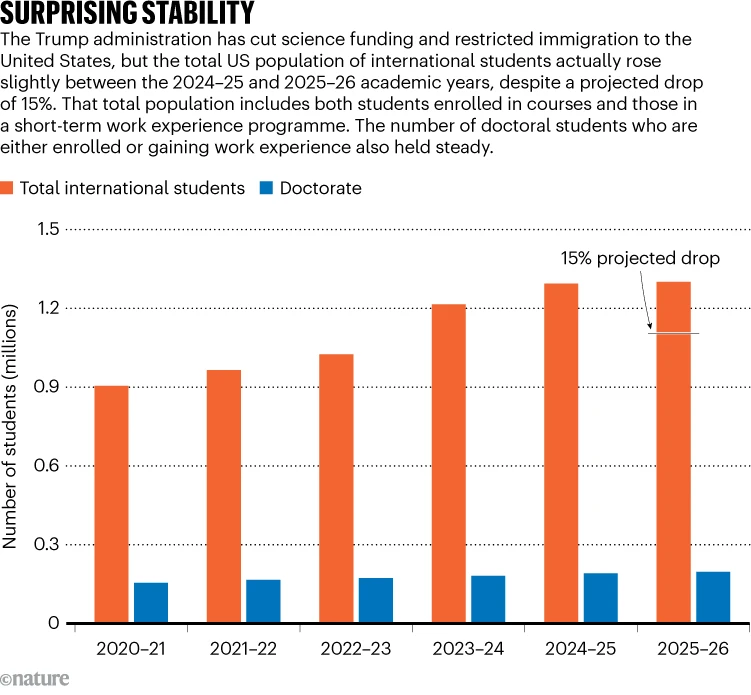
Unexpected Stability in US International PhD Enrollment Despite Trump-Era Policies

Despite a series of restrictive policies under the Trump administration—including tighter visa screening, limits on students from certain countries, and increased security reviews—international PhD enrollment at U.S. universities has remained remarkably stable. A Nature report published on 7 November 2025 notes that approximately 1.3 million international students are studying in the U.S. or participating in the Optional Practical Training (OPT) program this academic year, virtually unchanged from the previous year.

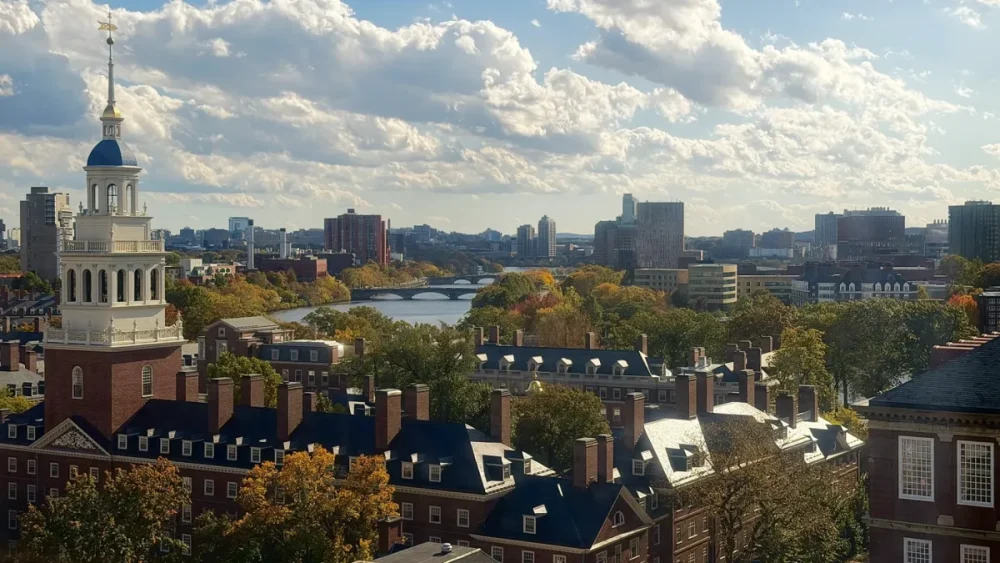
Asian Americans make up 41% of Harvard’s Class of 2029

On October 23, Harvard University released data for the Class of 2029, revealing that Asian Americans make up 41% of the incoming class — a 4-percentage-point increase from 37% in the Class of 2028. This change comes after the 2023 U.S. Supreme Court ruling that banned the use of race-based affirmative action in college admissions, prompting Harvard to adopt a “race-neutral” admissions policy.

Twenty Years After China’s College Expansion, U.S. Universities Emerge as Unexpected Beneficiaries

NBER recently released a new working paper showing that China’s massive university enrollment expansion, launched in 1999, has not only reshaped its domestic higher education system but also profoundly influenced the educational and economic landscape of U.S. universities and their surrounding communities. The study argues that China’s higher education reform unintentionally became one of the key driving forces behind the expansion of U.S. higher education.

Over One-Third of Nobel Laureates Are Immigrants — Nature Reveals a New Global Landscape of Scientific Migration

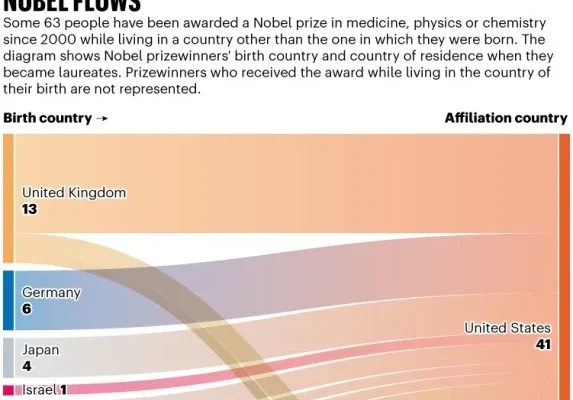
In an era marked by intensifying globalization and technological competition, the mobility of scientific talent has become a defining feature of the global innovation ecosystem. A recent analysis published in Nature highlights that since the start of the 21st century, over one-third of Nobel laureates in the sciences have had immigrant backgrounds. This finding not only illuminates the transnational networks underlying scientific excellence but also sparks broad discussion about mobility, equity, and the global distribution of innovation capacity.

A Family Legacy and the Dream of Education

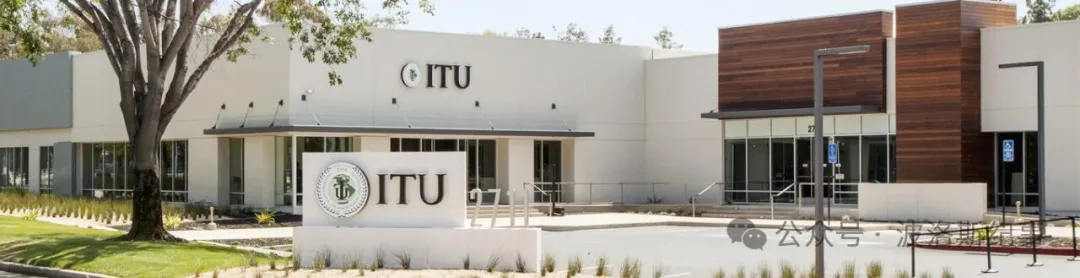
In the first half of this year, while helping a friend inquire about acquiring an American university, someone suggested I contact President Chen of the International Technological University (ITU) in California, as he was reportedly considering selling the school. A quick online search revealed that this university had quite an illustrious background. It was founded by Shu-Park Chan, son of the Republican-era Cantonese warlord Chen Jitang, and is now led by Jitang’s grandson, Yau-Gene Chan.

The Sharp Decline of Chinese Students Hits U.S. Universities and Small-Town Economies

The decline in the number of Chinese students is having a profound impact on U.S. universities and local communities. According to the Open Doors report released by the Institute of International Education (IIE), during the 2023/24 academic year, U.S. colleges and universities enrolled a total of 1,126,690 international students, an increase of approximately 6% compared to the…