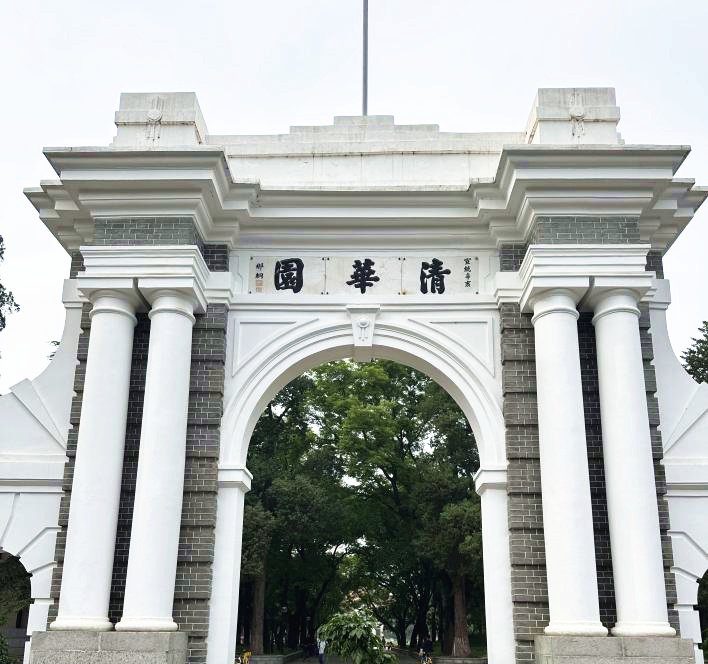
Recently, Tsinghua University released its latest graduate employment data, drawing widespread attention to changes in the employment structure of Chinese university graduates. The data show that the number of graduates from the Class of 2025 entering the manufacturing and energy sectors increased by 19.1 percent year-on-year, marking the sixth consecutive year of growth in this direction.
Official statistics also indicate that the total number of university graduates in China reached 12.22 million in 2025, roughly double the figure a decade ago and a new historical high. Against the backdrop of shrinking recruitment in the internet sector and more stable hiring by financial institutions, an increasing number of graduates are turning their attention to the real economy, including advanced manufacturing, new energy, and high-end equipment industries. The trend reflected in Tsinghua’s employment data is regarded by many scholars as an important window through which to observe changes in China’s talent flows and industrial structure: graduates from elite universities, once heavily concentrated in the internet and finance sectors, are gradually moving back toward the real economy.
Employment Patterns at Elite Universities Shift as Tech Industries and Manufacturing Gain Ground
Employment data released by Tsinghua in recent years suggest a subtle yet notable shift in the structure of graduate employment. Information technology services, research institutions, education, and manufacturing have long been major destinations for graduates. However, the proportion of graduates entering advanced manufacturing and energy industries has increased significantly.
Public records show that companies such as Huawei, State Grid Corporation of China, China Electronics Technology Group, and BYD have consistently ranked among the largest employers of Tsinghua graduates in recent years. Many of these positions are concentrated in areas such as telecommunications equipment, new energy technologies, power systems, and high-end equipment research and development.
Similar trends can be observed at other leading universities. According to an employment report released by Tongji University, about 70 percent of graduates from the Class of 2025 who entered the workforce joined key industries such as integrated circuits, new energy vehicles, aerospace, high-end equipment manufacturing, and the digital economy. An employment quality report from Shanghai Jiao Tong University also shows continued growth in the number of graduates joining advanced manufacturing and high-tech firms, with companies in electronics, semiconductors, and new energy vehicles among the most active recruiters.
At the same time, further education remains a major choice for graduates from top universities. In recent years, more than 80 percent of undergraduate students at Peking University have chosen to pursue postgraduate studies, while the proportion at some science and engineering universities has remained around 70 percent. Researchers studying graduate employment note that the rising rate of postgraduate study reflects both the growing attractiveness of academic research and the intensifying competition in the job market. Among graduates who choose to enter the workforce directly, however, the share joining technology-intensive industries has increased significantly.
Notably, the internet and finance sectors still retain considerable appeal among elite university graduates, but recruitment growth is no longer as rapid as it was a decade ago. Employment officials at several universities have indicated that the number of campus recruitment positions offered by internet companies has declined in recent years, while demand from companies in new energy, smart manufacturing, semiconductor technology, and industrial software continues to grow.
National Employment Landscape: Expanding Demand from the Real Economy
From a nationwide perspective, similar shifts are also becoming apparent in the employment structure of graduates. According to statistics compiled by several recruitment platforms and labor-market research institutions, demand for university graduates in the manufacturing sector has grown steadily in recent years. Some studies show that the share of graduates entering manufacturing has increased from around 2 percent in 2020 to nearly 7 percent in 2024. Although this proportion remains lower than that of the internet and information technology industries, the growth rate has been significant.
In terms of recruitment demand, the IT and internet sector still accounts for the largest share of campus recruitment positions. However, industries such as electronics and semiconductors, new energy, and machinery and equipment manufacturing have shown particularly strong growth in hiring demand. According to campus recruitment research reports, the five industries with the highest demand for graduates are IT and internet, electronics and semiconductors, professional services, finance, and mechanical manufacturing, together accounting for more than half of all campus recruitment positions.
At the same time, the continued expansion of China’s graduate population has also reshaped the employment landscape. Data from China’s Ministry of Education show that the number of university graduates reached approximately 11.79 million in 2024 and increased to 12.22 million in 2025, with the figure expected to remain high in the coming years. The rapid growth in the number of graduates means that the internet and financial sectors can no longer absorb as large a share of new entrants as they once did, while advanced manufacturing and emerging industries are becoming increasingly important sources of employment.
China’s ongoing industrial upgrading has also reshaped the nature of manufacturing jobs. Traditional assembly-line roles are gradually declining, while demand for research and development, engineering design, automation control, and data analysis positions has risen sharply. Recruitment managers at several manufacturing companies say that the most acute talent shortages are no longer among frontline production workers but among engineers with both technical expertise and software capabilities.
The new energy vehicle (NEV) industry provides a clear example. Its industrial chain extends far beyond vehicle assembly to include battery materials, electric motors, electronic control systems, and autonomous driving software. Companies across the sector require large numbers of graduates trained in mechanical engineering, materials science, electronics, and computer science, making manufacturing roles increasingly attractive to science and engineering students.
Salaries and Career Paths: The Internet Sector’s Advantage Narrows
In terms of compensation, the internet sector still offers relatively competitive salaries, but the gap is gradually narrowing. According to salary reports released by several recruitment platforms, entry-level technical positions in internet companies typically offer starting monthly salaries between RMB 15,000 and RMB 20,000. By contrast, R&D positions in new energy, semiconductor, and smart manufacturing firms usually offer starting salaries between RMB 12,000 and RMB 18,000, with some leading companies approaching the pay levels of internet firms.
At the same time, many manufacturing companies are seeking to attract graduates by offering research opportunities, equity incentives, and long-term career development prospects. For instance, companies in the new energy vehicle and battery sectors are investing heavily in research and development, with some firms employing more than 30 percent of their workforce in R&D roles. As corporate research systems expand, career pathways for engineers are also becoming clearer.
Employment officials at several universities note that students are increasingly considering long-term industry prospects, rather than focusing solely on starting salaries. Some graduates believe that sectors such as new energy, semiconductors, and high-end equipment manufacturing offer stronger long-term growth potential and more stable career development opportunities.
Meanwhile, after years of rapid expansion, the internet sector has entered a period of adjustment. Several large internet companies have scaled back recruitment in recent years and are placing greater emphasis on technical research and development capabilities rather than purely operational roles. This shift has prompted some graduates to redirect their career ambitions toward industrial technology sectors.
Talent Flow as a Signal of Industrial Upgrading
From a macroeconomic perspective, the increasing number of elite university graduates entering the real economy is widely seen as an important indicator of changes in China’s economic structure. Over the past decade, China’s booming internet economy attracted large numbers of graduates from top universities. However, as industrial upgrading accelerates and global technological competition intensifies, the Chinese government has increased investment in strategic sectors such as advanced manufacturing, semiconductors, energy technologies, and high-end equipment, leading to rising demand for engineering and technical talent.
At the same time, manufacturing itself is undergoing profound transformation. Smart manufacturing, industrial internet technologies, and artificial intelligence are reshaping traditional production processes, gradually turning manufacturing into a technology-intensive sector. Many positions now require not only expertise in mechanical or materials engineering but also skills in software development, algorithm design, and data analytics.
Some research institutions argue that if this trend continues, China’s talent structure may gradually tilt toward the real economy. An increasing number of highly educated engineers entering manufacturing could enhance corporate research capacity and accelerate technological innovation, thereby supporting industrial upgrading.
For China’s higher education system, this shift also suggests the need to further adjust talent-training models. Universities must not only cultivate researchers in fundamental science but also train engineers and technology managers capable of contributing to industrial innovation.
From Tsinghua University’s employment data to broader national employment trends, it is increasingly evident that China’s highly educated talent pool is moving toward advanced manufacturing, new energy, and other strategic technology industries. In an era of intensifying global technological competition, talent flows are becoming a crucial indicator of industrial transformation. The return of elite university graduates to the real economy may well signal a deeper shift in China’s innovation system and economic development model.