2026: China’s College Graduate Population Hits New Historical High
According to recently released data from the Ministry of Education, the number of graduates from national universities is expected to reach 12.7 million in the Class of 2026.
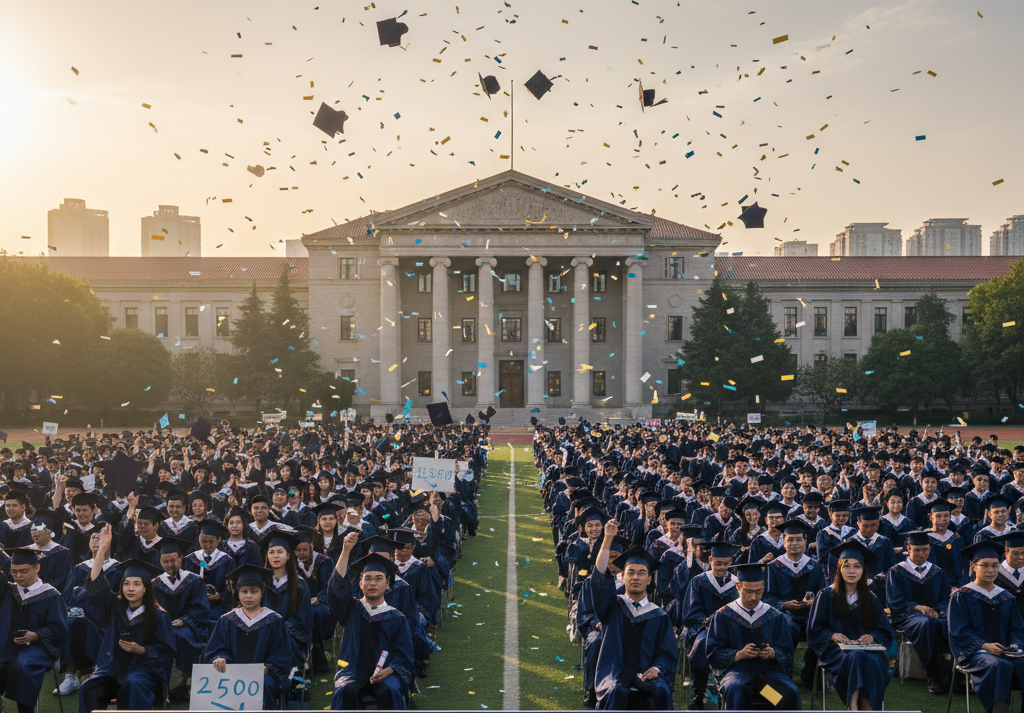

According to recently released data from the Ministry of Education, the number of graduates from national universities is expected to reach 12.7 million in the Class of 2026.
In a recent signed article in People’s Daily Overseas Edition, Tan Tieniu, Academician of the Chinese Academy of Sciences and Party Secretary of Nanjing University, offered a clear answer. Internationalization, he argued, must not slow down. It must deepen, expand, and evolve to a higher level.

China’s largest research institution, the Chinese Academy of Sciences (CAS), has notified its internal researchers that, starting March 1, 2026, it will stop using institutional research funds to cover Article Processing Charges (APCs) for certain high-cost open access (OA) journals.
Starting in 2026, all international students applying for undergraduate programs under the Chinese Government Scholarship will be required to submit results from the China Scholastic Competency Assessment (CSCA). This examination system, coordinated and promoted by the China Scholarship Council, is widely regarded as a key reform initiative in China’s higher education internationalization process in recent years.
Numerous faculty members and students stated that Purdue has an “informal policy” that, through university-level approval mechanisms, significantly reduces graduate admission opportunities for students from China and other countries perceived as security risks.
In recent years, China’s engineering doctoral education has undergone a milestone reform: students are no longer required to write and publish a traditional dissertation to obtain a PhD. Instead, they may defend substantial products, technological prototypes, or complete engineering solutions.

Confronted with the near “ground-up upheaval” that generative AI (GenAI) has brought to the foundations of traditional teaching, Stanford has not taken a defensive, conservative stance. Instead, through this costly, cross-disciplinary blueprint, the university is attempting to anchor new coordinates for global higher education at a moment when the technological singularity feels increasingly near.
Roughly half of the authors of social media–related research published in top academic journals have disclosable industry ties—most of which are not disclosed in the papers themselves.

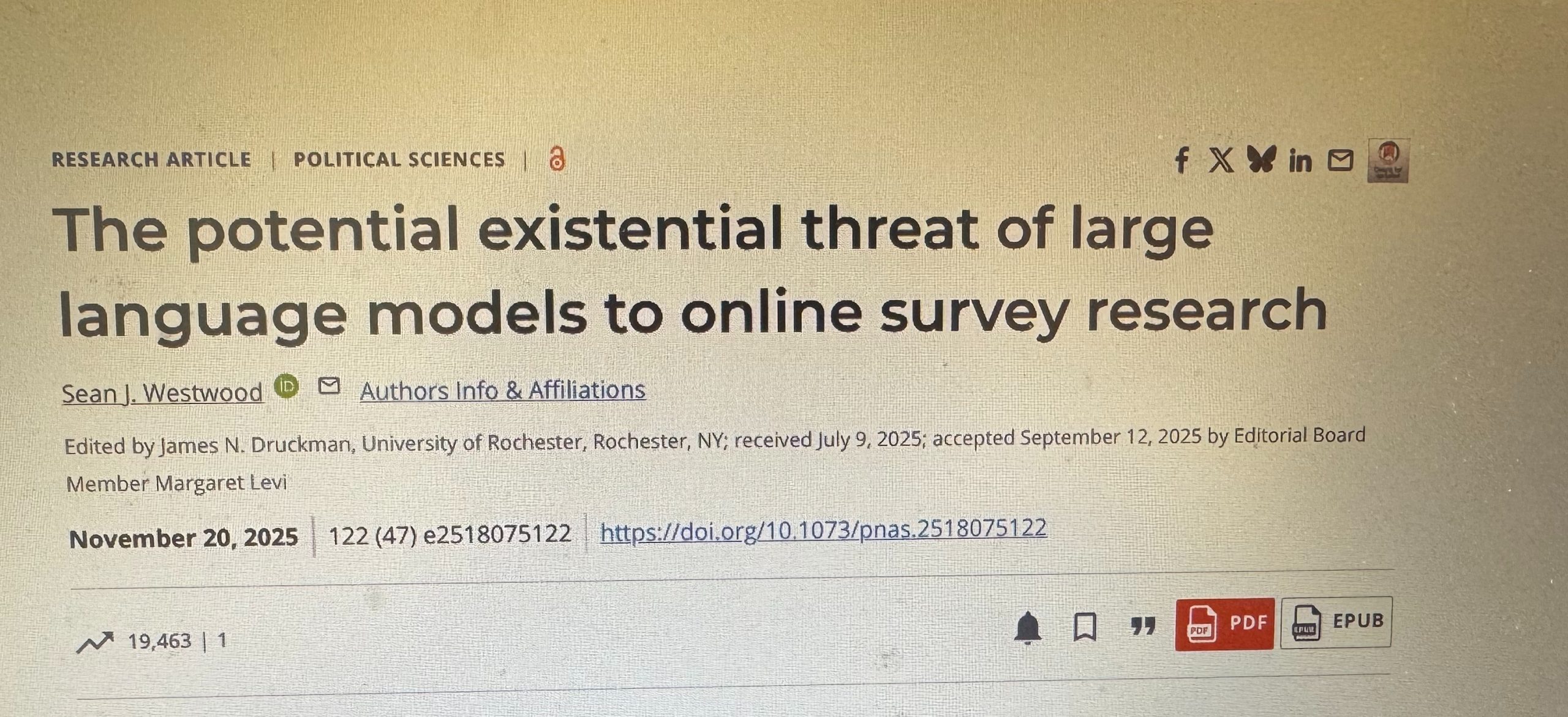
For a long time, online survey research has been regarded as a foundational tool of modern social science, public policy analysis, and opinion polling. However, a new study published in the Proceedings of the National Academy of Sciences (PNAS) warns that this widely relied-upon method is now facing unprecedented challenges amid the rapid advancement of…
Recently, a research team at Georgetown University released a landmark report titled “2025: Ranking 4,600 Colleges by Return on Investment.” The study provides a comprehensive analysis of the economic value of U.S. higher education, covering a broad spectrum of institutions—from public community colleges to elite private universities