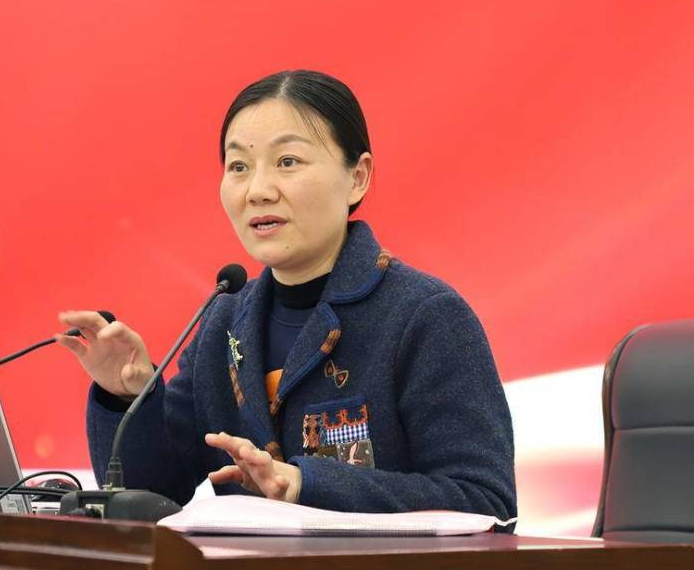
During the annual sessions of China’s National People’s Congress and Chinese People’s Political Consultative Conference—commonly known as the “Two Sessions”—a proposal by Wei Qiao, a deputy to the National People’s Congress from Jiangsu Province, quickly drew widespread public attention. She suggested that Chinese universities introduce a compulsory course titled “National Demographics and Emotional Awareness” for lower-year undergraduates, worth 1–2 credits, to help students develop a positive outlook on marriage and childbearing at an earlier stage. Her call directly addresses one of China’s most pressing demographic challenges today: the country’s total fertility rate has hovered at a low level of 1.0–1.1, far below the 2.1 needed to maintain population stability. Negative population growth has already become a reality, while a powerful wave of population aging is approaching.
In her research, Wei found that many university students respond to topics such as dating, marriage, and children with “remarkable indifference,” sometimes lacking even basic interest. Reflecting personally, she remarked that if she could return to her university years, she would have had two children while pursuing her graduate studies. This candid and down-to-earth comment resonated widely and reminded the public that college students—who will form the future backbone of the country’s childbearing population—hold attitudes that may shape the nation’s long-term trajectory. Once the proposal was released, discussion surged across social media. Some supported the idea, arguing that “earlier guidance brings earlier benefits,” while others bluntly responded that employment prospects and housing prices should be solved first. Regardless, the proposal has pushed higher education to the forefront of China’s population strategy, calling for efforts to address young people’s growing detachment from family life at the level of values and perceptions.
Low willingness among youth to marry and have children
A nationwide survey conducted in 2024–2025 and led by the Institute of Psychology, Chinese Academy of Sciences, covering 55,781 university students across 31 provinces, reveals a concerning reality. 51.8% of respondents believe that “having a marriage is not important,” while 59.4% think that having children is not necessary. Gender differences are particularly striking: among female students, as many as 85.3% accept the idea of marrying without having children, and overall more than 80% of women express negative attitudes toward childbearing.
Only 64.5% of students have ever been in a romantic relationship. The ideal age for marriage is set at around 28, but in reality it is often delayed by about two additional years. Around 70% of students can accept marriage without children, yet very few are willing to do the reverse—having children without marriage. High living costs, employment pressure, lack of childcare support, and concerns about disruptions to career development are repeatedly cited as major obstacles. Students in major cities such as Beijing and Shanghai show fertility intentions about 10% lower than those from rural areas. Meanwhile, the “child-free by choice” lifestyle trending on social media further amplifies this decoupling between marriage and childbirth.
These stark numbers act like a mirror: while higher education has fostered independence among young people, it has also inadvertently delayed the golden window for family formation, leading many to treat marriage and childbearing as optional life choices rather than essential milestones.
Marriage and relationship education must resonate with real-world conditions
Experts note that classroom education alone cannot reverse the trend; a comprehensive approach is required. On one hand, universities should strengthen instruction in emotional management and family responsibility. On the other, policies must provide concrete support such as employment security and child-rearing subsidies.
Research also shows that graduate school is often a period when willingness to marry and have children drops sharply. Women in particular hesitate due to concerns about the “motherhood penalty” and a 20% gender wage gap. Wei Qiao’s personal reflections resonate with the public partly because of their practical tone. She emphasizes that early intervention can counter the rise of highly individualized approaches to marriage and encourage young people to understand the full chain—from national demographic realities to the everyday management of family life.
Student representatives have called for courses to protect privacy and avoid awkward, preachy formats, while parents hope such education will be closely linked with career planning. Experts widely agree that universities are a crucial arena for shaping values. If demographic education can be integrated into ideological and general-education curricula—and if China learns from the **“education plus support” model used in France—the country might raise its fertility rate by about 0.2 points before 2030.
The Ministry of Education and universities take action
China’s Ministry of Education of the People’s Republic of China issued guidance as early as late 2024, encouraging universities to incorporate “relationship education” into their curricula. Topics include population trends, new perspectives on marriage and childbearing, and skills for maintaining intimate relationships. The courses are designed to be grade-specific: freshmen learn basic national demographic realities, while upper-year students focus on practical communication skills.
Several universities have already begun experimenting. Tsinghua University and Peking University have piloted modules within ideological-political courses, increasing student awareness by about 15%. Fudan University offers elective seminars on family education, while Sun Yat-sen University integrates fertility topics into health education programs. Nanjing University has taken a bold step by introducing VR simulations, allowing students to immerse themselves in emotional scenarios; participants reported a 35% increase in willingness to have children. Zhejiang University has adopted a hybrid online-offline model reaching over 5,000 students, with 28% reporting gradual changes in their views after graduation. A long-term alumni study by Xiamen University found that participants in such courses married on average 1.5 years earlier and had 0.3 more children than peers.
Vocational colleges have also experimented with child-care simulation workshops, achieving satisfaction rates as high as 85%. Although these initiatives currently cover only about 30% of universities, the direction of policy is becoming clear: incorporating marriage and fertility education into core credits, using methods such as role-playing, alumni sharing, and collaboration with businesses and family-planning authorities, while establishing long-term tracking mechanisms.
Whether these measures will achieve the intended effect remains to be seen. After all, education on marriage and relationships is not an isolated battlefield; it is a systemic project that requires coordinated efforts across the economic, cultural, and social spheres.